
The Invisible Talent
What your org chart doesn't know about your people
Think about the last time your organization had to decide whom to promote, whom to retain, or whom to put in charge of a team. What information did you base that decision on?
Probably an org chart, performance reviews, and KPIs. All of that is valuable, yet it only answers one question: what each person does. It almost never answers the other: what each person makes possible.
That is the zone where invisible talent lives. Eliana B. Ribeiro, Regional Leader at Scienza Uruguay, describes it accurately: “In any company, there are roles that shine on their own and others that hold everything together from behind the scenes: logistics, backoffice, customer support. Their work shows up when something goes wrong, never when things go right.”
Why formal reports aren't enough
Eliana leads teams across several countries and different realities. And she is well aware of her blind spot: “As a regional leader, my constant risk is having a perspective filtered through formal reports.”
Her decision was to broaden what she looks at. Not to replace reports, but to complement them with the signals people generate every day: who recognizes whom, who supports others, how teams connect.
Three signals that change the conversation about talent
1. Who supports others
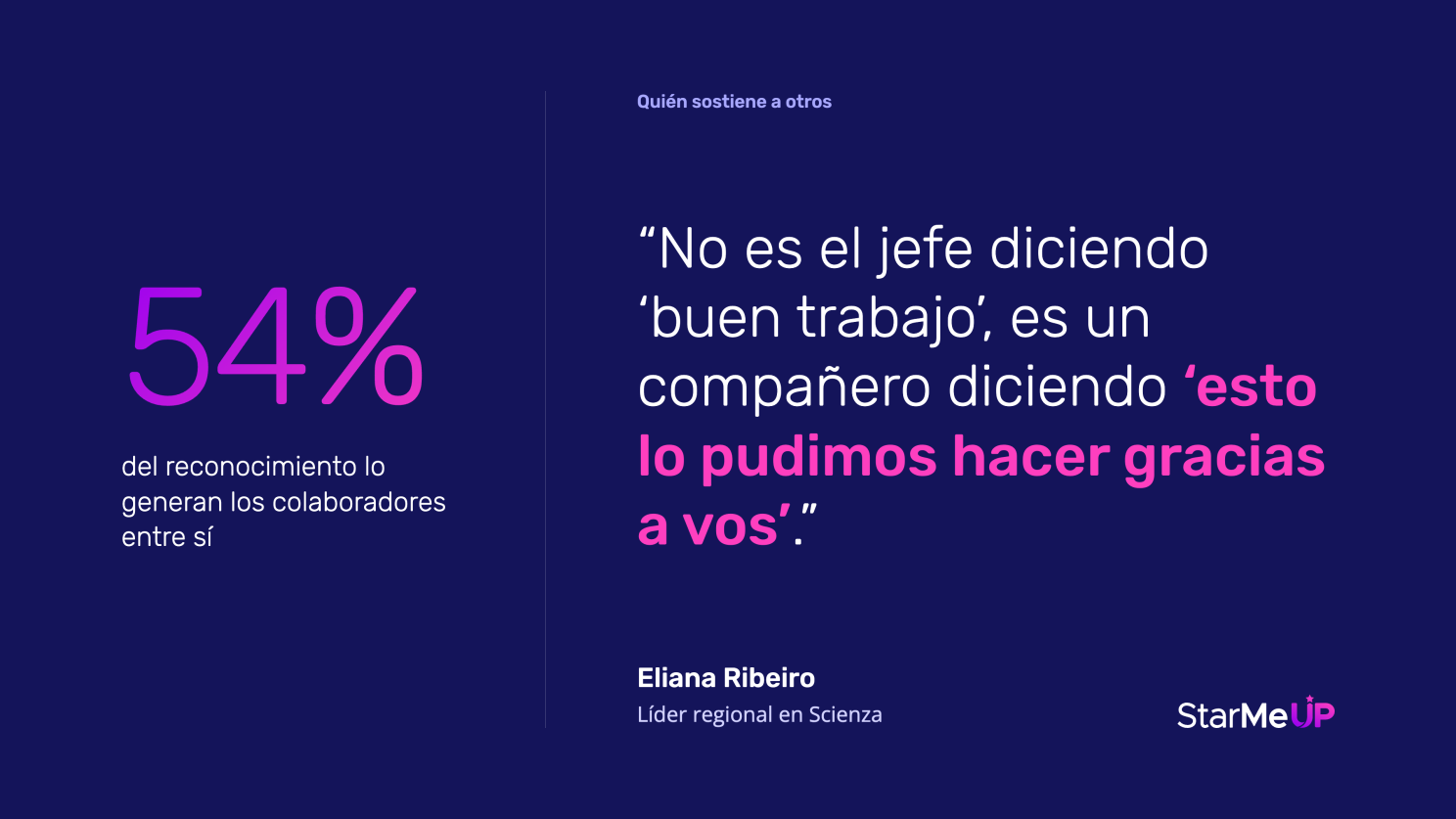
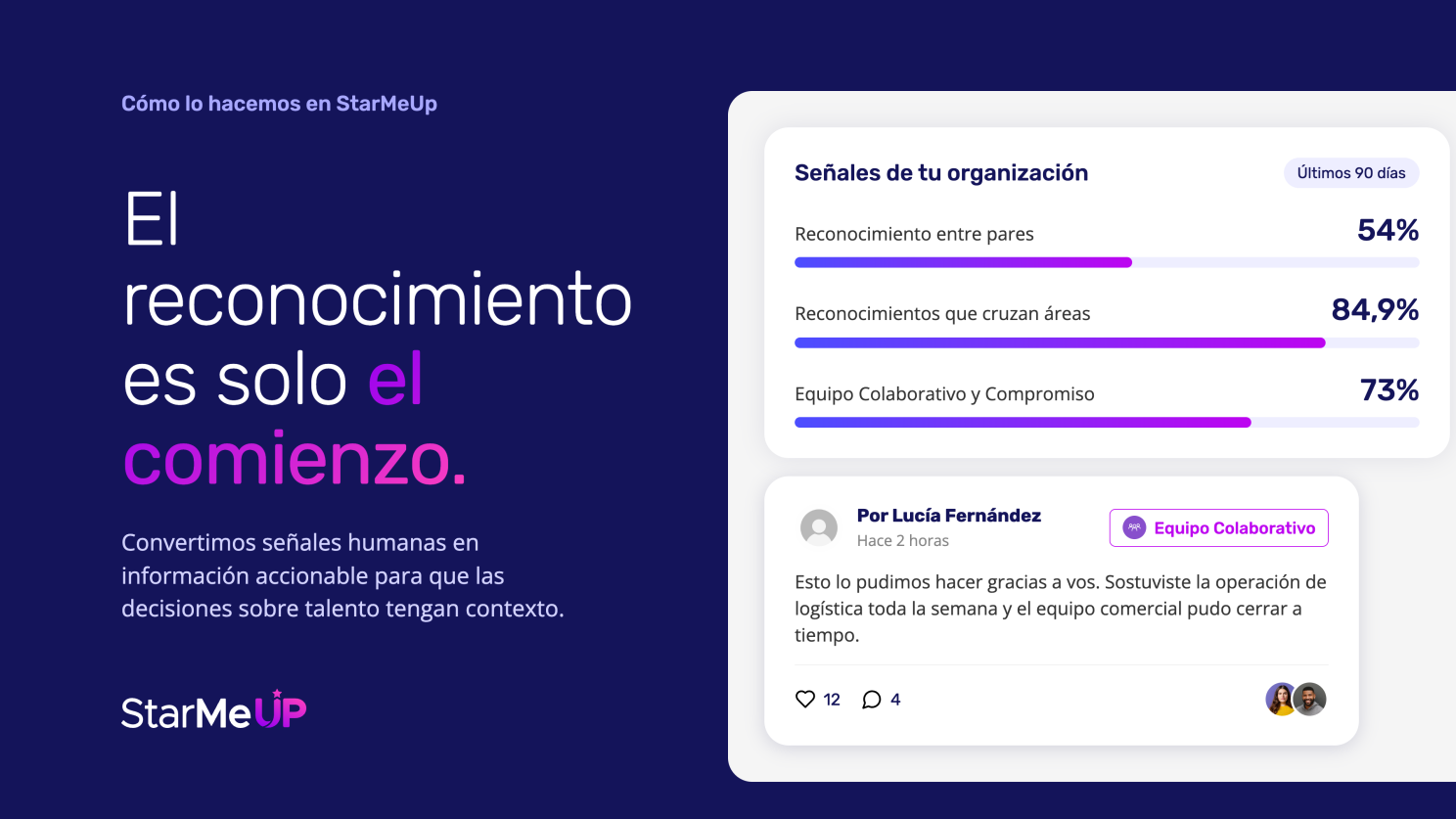
Peer-to-peer recognition is a map of whom people truly turn to. On Eliana's team, 54% of recognition is generated by employees themselves toward one another. And that origin is precisely what gives it value: “It’s not the boss saying ‘good job’; it’s a colleague saying ‘we were able to pull this off thanks to you.’”
2. Where the bridges are
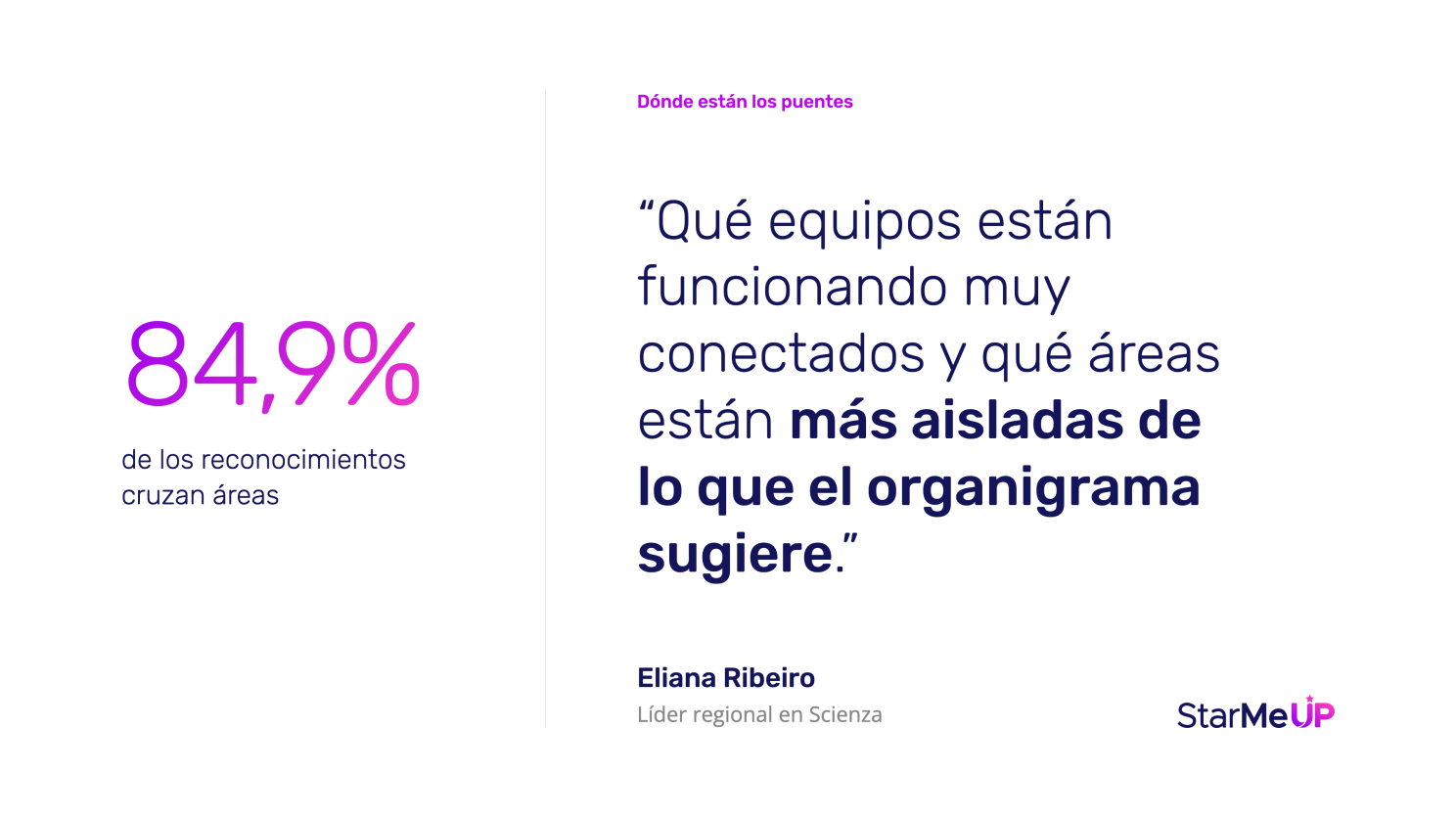
The org chart draws the boundaries. Interactions show how work actually gets done. At Scienza, 84.9% of recognitions cross departments. For a regional leader, that means being able to see “which teams are operating closely connected and which areas are more isolated than the org chart suggests.”
3. Which behaviors are celebrated
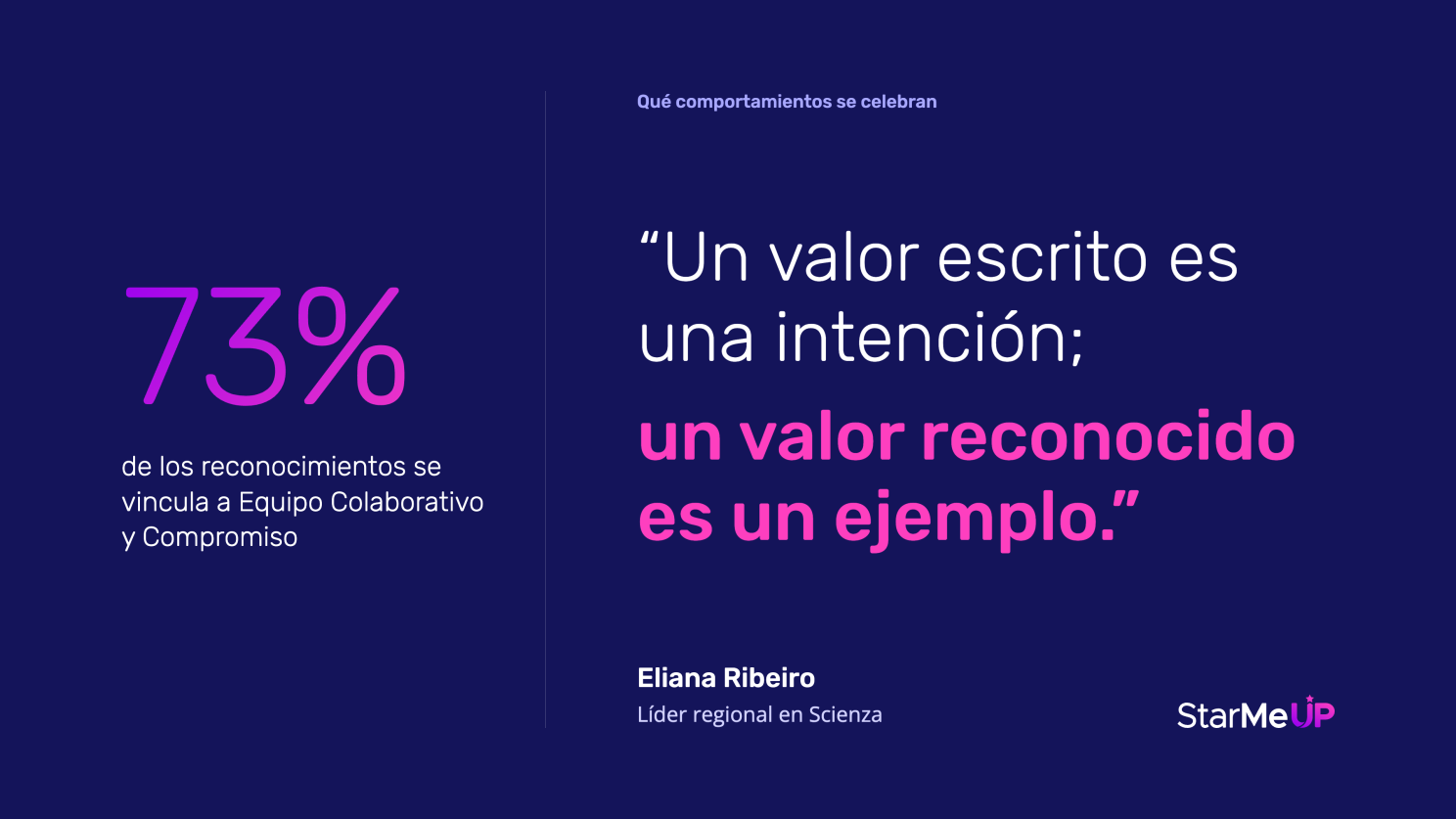
An organization's values don't live on a wall, but in what people see recognized: “A written value is an intention; a recognized value is an example.” At Scienza, 73% of recognitions are linked to Collaborative Team and Commitment. And when people were asked how they would describe the company, commitment was one of the most repeated words. What is stated and what is celebrated point in the exact same direction.
What changes when you can see it
The difference between a dashboard and these signals is the timing of when they arrive. A metric usually confirms what has already happened. Interactions show what is starting to happen. In Eliana's words: “These are signals that no KPI dashboard gives me. And they arrive before problems do.”
That is why the shift she describes is one of mindset rather than tools: being able to lead “with fewer assumptions and more evidence about what is really happening among people.”
For any organization, the implication is concrete. A talent decision with context is a different kind of decision. It changes whom we see as key, how we read a seemingly isolated area, and which behaviors we want to see repeated.
Three questions for your organization
- How do you currently know who is key to your team, beyond their job title?
- Which departments truly collaborate with each other, and how do you know?
- Do the behaviors you celebrate match the values you declare?
How we do it at StarMeUp
We understand organizations as living systems: they generate signals every day, in every recognition and every collaboration. Our job is to turn those human signals into actionable insights, so that culture, performance, and development are read together and talent decisions have context.
Recognition is just the beginning.
If you want to apply these strategies in your organization, let's talk: https://www.starmeup.com/